Open Today Sales: 9 AM-8 PMOpen Today Service: 7:30 AM-7 PM

Volkswagen 4MOTION is an all-wheel-drive system you'll find only on VW models. It provides enhanced traction in inclement weather and other slippery conditions while enhancing drivability in a predictable and safe manner. Whether you're driving down a muddy road or navigating a steep, snow-covered cliffside, Volkswagen 4MOTION distributes power between the front and rear axles for greater stability.
Many automakers have been equipping their vehicles with all-wheel drive for many years. However, not all systems are created equal. Some of them feature full-time engagement, while others offer additional traction only when needed. There are also systems that distribute power to all four wheels via electronically controlled setups, as opposed to traditional mechanical connections. Learn more about what makes VW 4MOTION different from the rest and how it can improve your driving experience, then visit Gunther Volkswagen Fort Lauderdale to see for yourself.
VW 4MOTION is a power distribution system that uses sensors to monitor each wheel's speed. When the system processor detects that one wheel is spinning faster than the others – that is, when it is essentially losing traction – it dampens the power and torque sent to that wheel to regain traction. The 4MOTION system uses the vehicle's traction control, stability, and anti-lock braking systems to detect wheelspin and manage traction between the wheels.
In comparison, other four-wheel-drive systems are engaged using a lever, switch, or another feature that mechanically enhances traction. Older trucks with four-wheel drive required you to manually lock the front hubs, but modern systems no longer rely on this.
4MOTION is a unique Volkswagen AWD system that's controlled by an electronic processor; it does not require any manual assistance from the driver. The result is a system that enhances the vehicle's safety, control, and driving dynamics through nearly any type of weather or road conditions.
Volkswagen 4MOTION is available in two configurations – one relies on a self-locking center Torsen differential, while the other uses an electronically controlled multi-plate Haldex clutch system.
The mechanical Torsen differential helps manage the torque distribution between the front and rear axles by shifting power when wheel slip is detected. In slippery or snowy conditions, this can mean the difference between getting to your destination and getting stuck on the road. However, there is one caveat: the system makes the car heavier and thus, less fuel-efficient.
The Haldex system, on the other hand, uses an electronic unit that manages the traction and torque. One advantage is that the system allows the vehicle to operate primarily in a front-wheel-drive configuration, making it more fuel-efficient. The system specifically sends power to the rear wheels if it detects the front wheels slipping.
With either system, 4MOTION delivers all-wheel-drive traction only when necessary. Under normal driving conditions, such as when cruising on the highway, the vehicle operates in two-wheel-drive mode. When the AWD system kicks in, the 4MOTION system is so seamless that the driver typically doesn't even notice.

First, it's important to know the difference between "four-wheel drive" and "all-wheel drive" – these terms are not interchangeable. An all-wheel-drive system relies on sensors to tell the controller how much power is needed when a wheel loses traction. It then sends a proportional amount of torque to each axle to prevent wheel slippage. 4MOTION systems are considered all-wheel-drive configurations.
On the other hand, a four-wheel-drive (also known as a 4x4) system is activated manually by the driver via a lever or switch. These systems generally send equal power to the front and rear axles, making them ideal for extreme off-roading and towing. You can typically find four-wheel-drive systems in large SUVs and trucks, which are primarily designed for heavy-duty off-road use.
Compared to a traditional all-wheel-drive setup, 4MOTION all-wheel drive is a more sophisticated system. Since the 4MOTION processor only engages the all-wheel-drive functionality when it detects a loss of traction, there is no switch or button for the driver to engage it. Instead, it will automatically provide power to all four wheels or cut power to the wheel that is losing traction and starting to slip. Ultimately, the 4MOTION system works seamlessly behind the scenes and can react to any perilous driving conditions before you do.
Complementing this intelligent configuration is the 4MOTION Active Control system, which allows drivers of models equipped with it to select from different driving modes, including Snow Mode, On-Road Mode, Off-Road Mode, and Off-Road Custom Mode. Each of these settings changes the transmission shift points, engine power, and other factors that contribute to the vehicle's traction and safety. With these configurable modes, the 4MOTION system delivers the smoothest possible driving experience.
Here are the 2026 models available with Volkswagen 4MOTION:
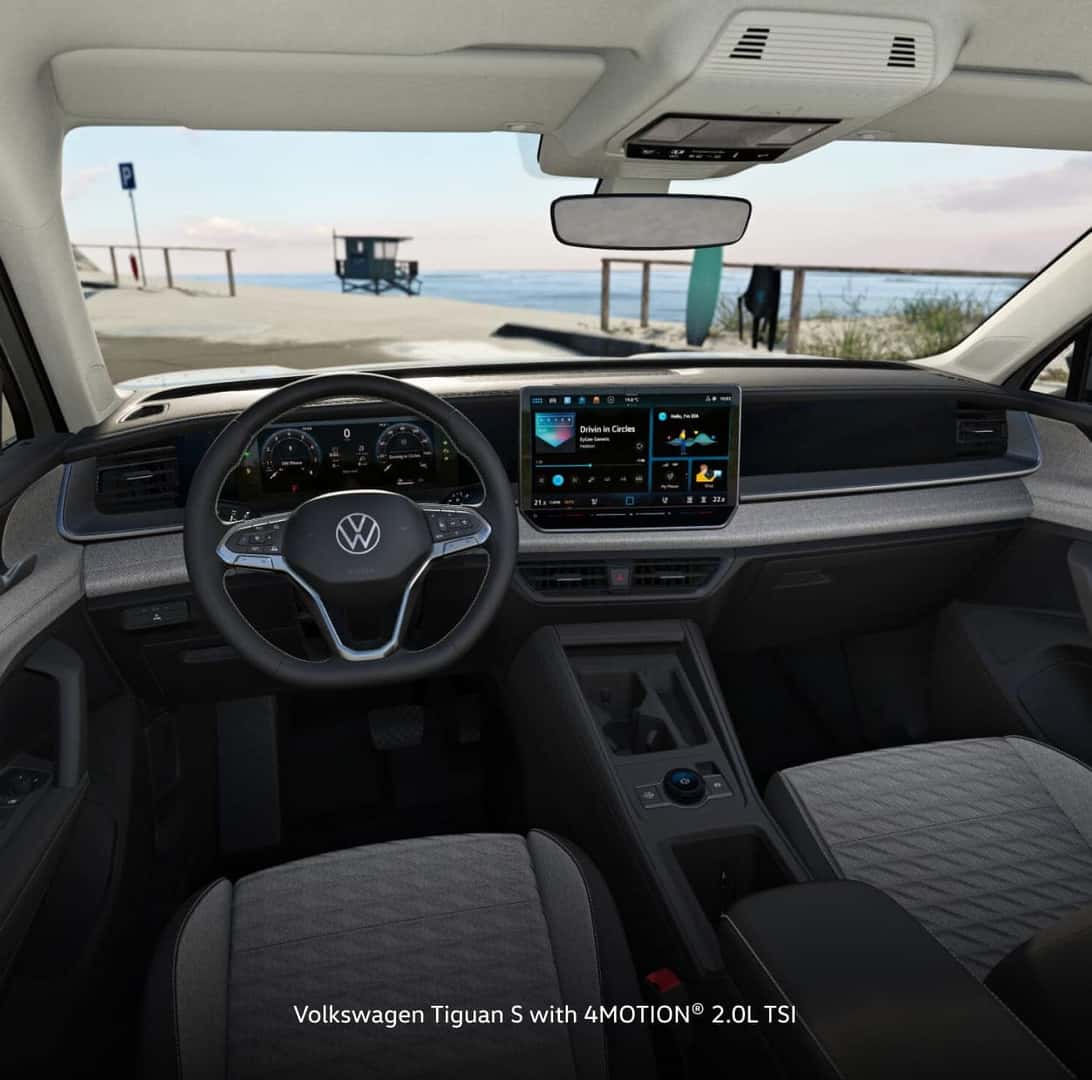
On these models, the 4MOTION AWD system is available on various trim levels, except for the Golf R, which comes standard with it. For cars like the Volkswagen Tiguan, 4MOTION is optional across much of the lineup, making it easier to find a model that offers the added traction and control you desire.
As for other high-performance and commuter-friendly automobiles like the Volkswagen Golf GTI and Volkswagen Jetta, 4MOTION is not available. If you're interested in test-driving one of the models with this enhanced AWD system, contact our team to schedule an appointment.
In addition to improving traction in slippery conditions, the 4MOTION system pairs with the various onboard safety and driver-assistance systems to give you and your passengers more peace of mind on the road. After all, Volkswagen vehicles are renowned for their safety, thanks to driver-assistance features, safety cages, and intelligent crash response systems, and more.
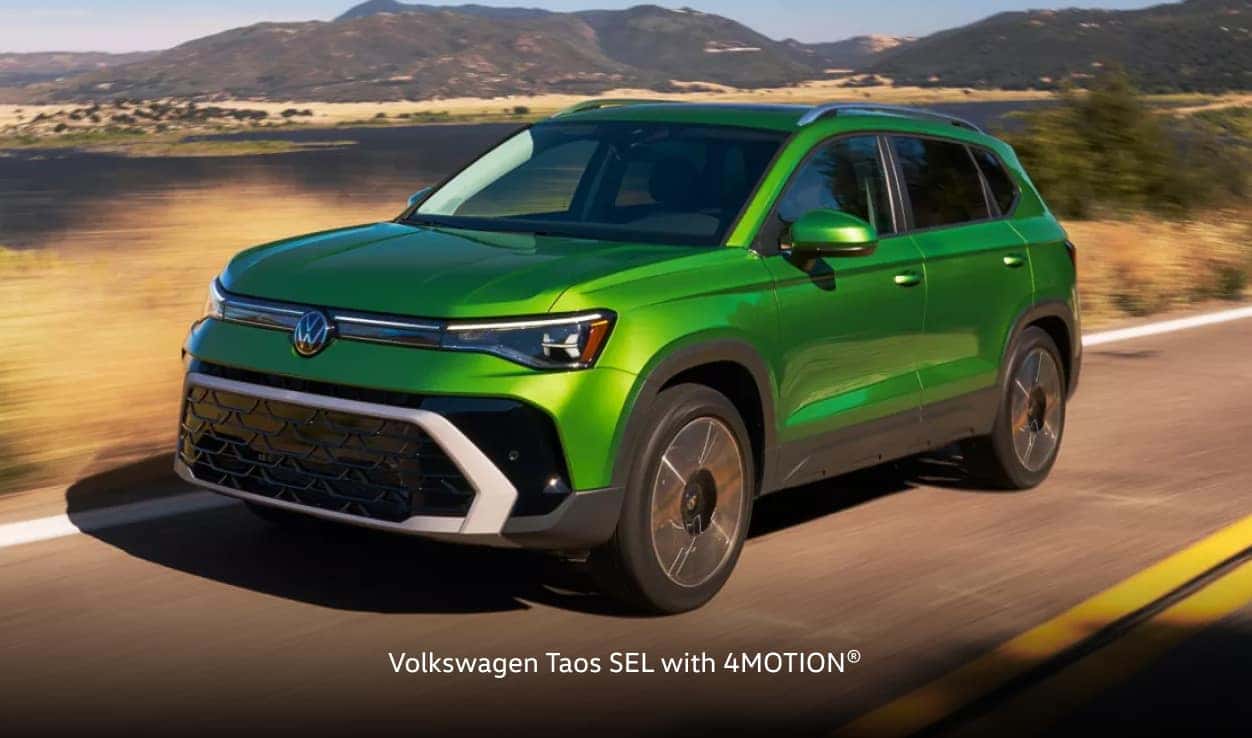
The 4MOTION system also enhances a vehicle's acceleration performance. For example, when you hit the throttle on a VW Golf R and accelerate from 0-60 mph in as little as 4.1 seconds,1 the 4MOTION system ensures a smooth take-off, using its sensors to gain traction as the vehicle launches off the line. The same can be said for when a Volkswagen Taos drives down the road using the 4MOTION setup to keep it steady and connected to the road, even in difficult driving conditions.
One model in the lineup, the Volkswagen ID.4, has an alternative to the 4MOTION all-wheel-drive system. The all-electric SUV comes standard with rear-wheel drive, but there is an option to upgrade to all-wheel drive. When doing so, another electric motor is added to the rear axle, bringing the total power output to 335 horsepower
Unlike 4MOTION, the all-wheel-drive system on the VW ID.4 does not have a mechanical connection between the axles. Instead, the front and rear motors drive the wheels through a differential and a single-speed gearbox. This means that the SUV drives with the rear motor most of the time and then engages the front motor when necessary, balancing performance and efficiency.
Whether you're in the market for a new Volkswagen Taos or a new Atlas, you can now make an informed decision when it comes to choosing between the trim levels with your newfound knowledge about 4MOTION all-wheel drive. Reach out to our team at Gunther Volkswagen Fort Lauderdale today to discuss upgrading your current vehicle and to have 4MOTION explained further.
1Reference to this third-party review/claim is solely for informational purposes and not to be relied upon. For more details, please visit https://www.caranddriver.com/volkswagen/golf-r.



